Explore expert articles, studies, webinars, and insights on Remote Therapeutic Monitoring (RTM), physical therapy, home exercise, and outcomes. Find valuable resources for patients and rehab therapy providers to enhance care and improve outcomes.

Thank you! Your submission has been received!
Oops! Something went wrong while submitting the form.
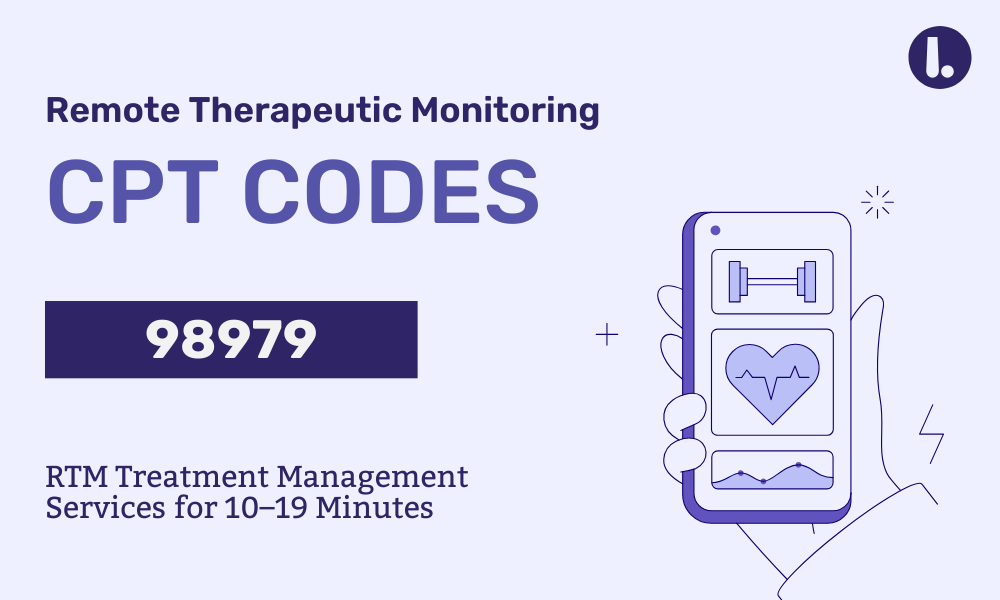
What is CPT Code 98979? Learn about this new RTM code for 10–19 minutes of treatment management, including 2026 reimbursement rates, eligibility, billing rules, and how it differs from 98980.
Learn how 2026 Remote Therapeutic Monitoring (RTM) updates and new CPT codes can increase reimbursement and strengthen patient engagement in your private practice. Watch the webinar now.
Watch this on-demand webinar to learn how new RTM CPT codes in 2026 can boost revenue, accelerate payments, and improve patient outcomes for your practice.
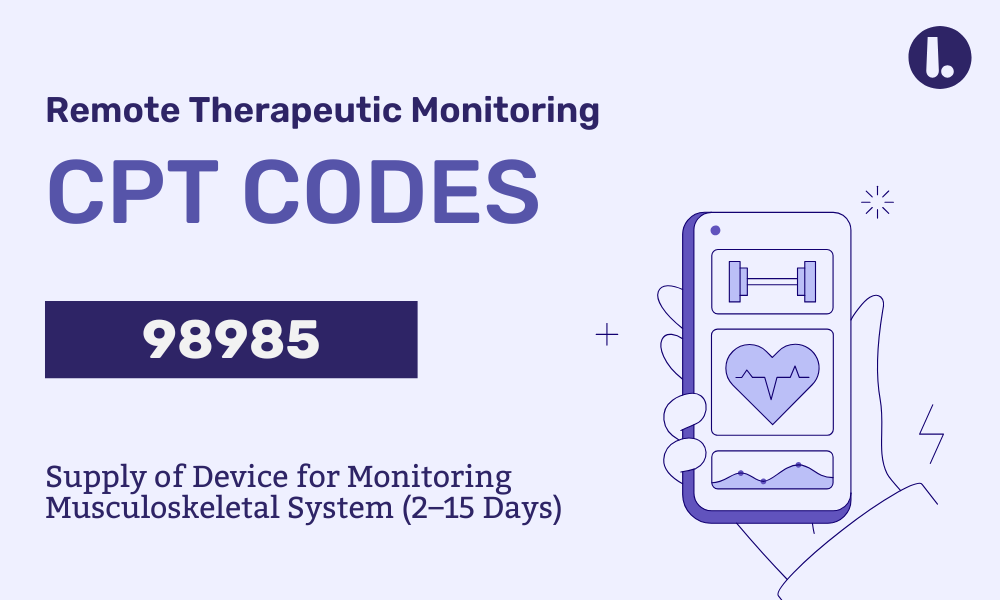
What is CPT Code 98985? Learn about this RTM code for 2–15 day data transmission, including 2026 reimbursement rates, eligibility, and how it differs from 98977.
Discover how new CPT codes in the 2026 CMS Final Rule expand RTM reimbursement—enabling shorter monitoring periods, lower time thresholds, and increased clinic revenue.
Explore CMS CY 2026 Proposed Rule updates and new RTM CPT codes in this 60-minute webinar. Learn billing opportunities, case study ROI, and how to prepare your practice for Remote Therapeutic Monitoring success.
The Centers for Medicare and Medicaid Services (CMS) has released the CY 2026 Physician Fee Schedule proposed rule. Learn what it means for Remote Therapeutic Monitoring (RTM) services and reimbursement.
Looking for simple ways to boost your physical and mental health this spring? Discover five evidence-based strategies that can help you feel better, recover faster, and stay active—no gym required.
Discover how a well-designed home exercise program can improve patient outcomes, boost adherence, and support recovery in physical therapy and occupational therapy.
Explore the benefits of hybrid care in physical therapy, blending in-clinic care with digital tools like Remote Therapeutic Monitoring (RTM) to improve patient outcomes.
Join billing and compliance expert, Rick Gawenda, PT alongside Limber Health's Julia Becker, for a on-demand webinar with an in-depth look into the 2025 CMS Final Rule and how it will affect your rehab therapy practice.
Join Limber Health and Raintree Systems' on-demand webinar, hosted by industry experts, to learn how automated RTM billing can boost revenue and reduce staff workload. Discover CPT code essentials, billing nuances, and best practices for revenue cycle management tailored for physical therapy practices.
Understand MIPS eligibility for physical therapy practices under the Quality Payment Program. Learn how to determine if providers meet Low-Volume Thresholds, plan for data collection, and use the QPP Participation Lookup Tool to avoid penalties and stay compliant.
Watch this 30-minute on-demand webinar to discover how to harness the potential of PRO data, turning insights into action, not only enhancing patient outcomes but contributing to research and value-based care initiatives.
Watch this 30-minute on-demand webinar to discover how to make PRO collection an ongoing habit for your patients to enhance their care and your clinic's effectiveness.
Discover how collecting physical therapy patient outcomes can be enhanced by effectively communicating the value of PROs. Learn strategies to engage patients and turn PROs into tools for personalized care.
Watch this 30-minute on-demand webinar to discover how automation can help improve patient reported outcome collection efficiency and reduce the burden on clinic staff.
Integrating patient-reported outcomes (PROs) into your physical therapy practice can enhance care quality and patient satisfaction. Learn how PROs help personalize treatment, track progress, and demonstrate value, while building a culture of accountability and continuous improvement.
Watch this informative on-demand webinar where billing and compliance expert Rick Gawenda, PT shares tips, tricks and best practices for billing for RTM.
Learn how to navigate MIPS (Merit-based Incentive Payment System) as a Physical Therapist with our guide, covering QCDRs, value-based care, and more. Maximize reimbursements and enhance patient outcomes while simplifying complex concepts.
Watch this informative on-demand webinar where you'll discover how to leverage the Merit-Based Incentive Payment System (MIPS) to enhance your physical therapy practice's profitability and competitive edge.
Updated for 2026: Complete guide to Remote Therapeutic Monitoring for PT/OT providers. New CPT codes 98985 & 98979, reimbursement rates, billing requirements, and benefits of RTM.
The 2024 CMS Final Rule has been released and includes a number of items that have the potential to impact Remote Therapeutic Monitoring and MIPS submission. Watch our on-demand webinar to learn more about these regulatory changes.
Learn about notable updates to Remote Therapeutic Monitoring (RTM) for 2024 with the release of the 2024 Physician Fee Schedule Final Rule by CMS. Learn about general supervision for PTs and OTs, data requirements, coverage expansion, and more.
Discover the Merit-Based Incentive Payment System (MIPS) and its impact on healthcare quality and reimbursement. Learn about the four performance categories, reporting, and how MIPS can benefit healthcare providers.
Learn about the best practices to successfully implement Remote Therapeutic Monitoring (RTM) and boost patient experience, enhance outcomes and increase practice revenue.
Watch this on-demand webinar to discover key insights into the 2024 CMS Proposed Rule and its potential implications for Merit-Based Incentive Payment System (MIPS) Participation. Our experts break down the complexities, to ensure you're ahead of the curve in understanding the changes that matter most for MIPS submission.
Watch this on-demand webinar to discover key insights into making Remote Therapeutic Monitoring a success in your practice. Our experts will share best practices for implementation and you'll hear first-hand experience from a group that is successfully scaling RTM across their organization.
The Centers for Medicare and Medicaid Services (CMS) has released the 2024 Physician Fee Schedule Proposed Rule. Read more about updates that are relevant to Remote Therapeutic Monitoring (RTM).
Implementing Remote Therapeutic Monitoring (RTM) can be a win-win for both providers and patients. Learn what your organization should consider when implementing RTM services in your practice.
There are many benefits of Remote Therapeutic Monitoring (RTM) like patients' ability to easily receive support & communicate with providers outside of the clinic.
Want to boost your health and well-being? Walking is a great place to start. Learn about the six ways walking can benefit your body and mind. Getting in your daily steps could be your healthiest decision today.
Remote Therapeutic Monitoring (RTM) and Remote Physiologic Monitoring (RPM) allow healthcare providers to remotely monitor the condition of their patients. Leran what each means, what services are included and who can bill the associated CPT codes for RTM and RPM?
Discover the basics and benefits of Remote Therapeutic Monitoring (RTM). RTM bridges the gap between in-clinic visits, empowering providers and patients with remote tools, virtual support, and communication to optimize treatment plans and improve adherence to home exercise programs.
Pain is a natural response to injury or illness, but it can also be a chronic condition. Learn about the science behind pain, how it affects our daily lives, and effective strategies for managing its effects.
Sleep is essential for optimal health and well-being, but what should you do when you can’t sleep? Read on to find four tips that could have you falling asleep faster and staying asleep longer, no counting sheep required.
Exercise is a powerful tool for improving mental health. Discover how squeezing 30 minutes of exercise into your day can change your perspective and benefit your mental well-being.
Discover how your home exercise program helps you build strength, stay motivated, and support your recovery between in-clinic physical or occupational therapy sessions.