Blog>

On-Demand Webinar: Recovery Forecast in Limber Outcomes

Julia Becker demos Recovery Forecast, included in Limber Outcomes, and shows how prediction brings outcome measures into decisions during care.
November 18, 2026

Key takeaways

  • Recovery Forecast is included in Limber Outcomes. It predicts each patient's expected path on their primary outcome measure across the first 90 days of care, using risk adjustment at intake.
  • At every reassessment, clinicians see the actual score against the prediction, so they can adjust the plan of care while the patient is still in treatment.
  • P-MCI marks each patient's predicted score at day 56 and defines meaningful improvement for each patient, compared with a single MCID threshold.
  • Limber Outcomes is built on the largest outcomes database in rehab therapy, with more than 284 million completed patient-reported outcome measures collected over decades.
On-Demand Session

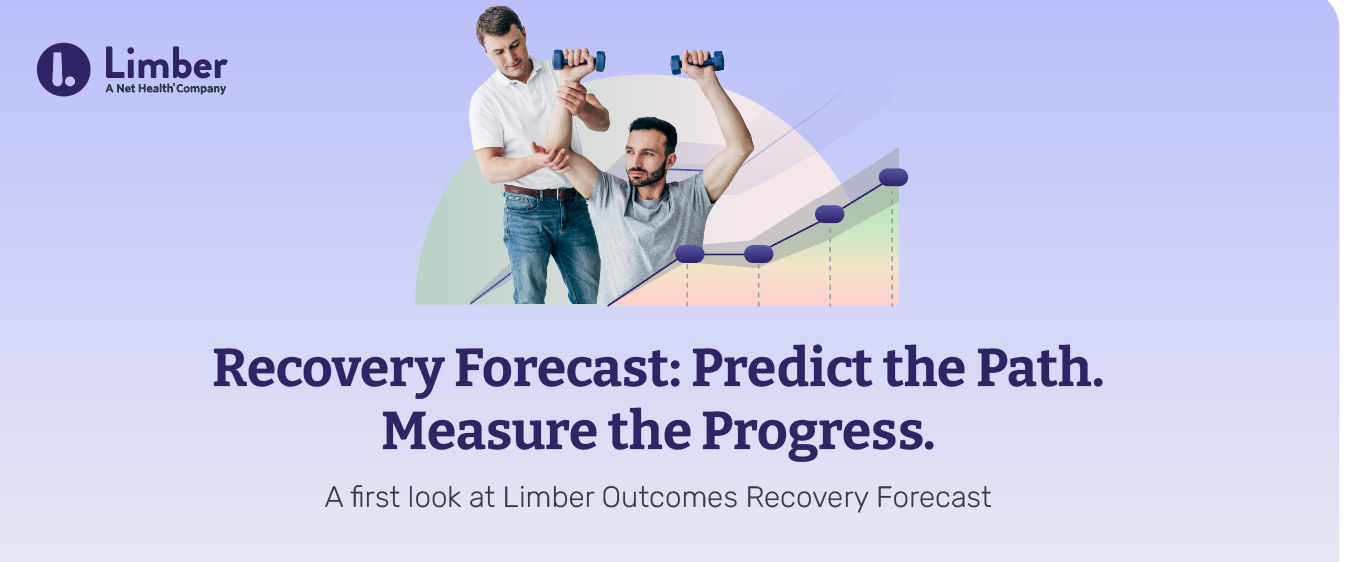
Recovery Forecast: Predict the Path. Measure the Progress.

Watch our on-demand session on Recovery Forecast, an included feature of Limber Outcomes.

About the Session

Outcome measures in rehab therapy have traditionally been reviewed at discharge, after the chance to adjust care has passed. Recovery Forecast brings recovery prediction into the episode itself. It is included in Limber Outcomes at no added cost, so practices that collect outcomes with Limber get the forecast on every eligible patient. Built on the largest outcomes database in rehab therapy, with more than 284 million completed patient-reported outcome measures collected over decades, it maps each patient’s expected path on their primary outcome measure across the first 90 days and compares every reassessment with it.

In this session, Julia Becker, Director of Outcomes, covers:

  1. Why a reference point matters during care, and how it moves outcome measures from discharge reporting into decisions within the episode
  2. A demo of the Forecast view in Limber Outcomes
  3. How to read the view: the optimal, expected, and outside ranges, and the Predicted Moderate Clinical Improvement (P-MCI) marker at day 56
  4. How P-MCI defines meaningful improvement for each patient, and how that differs from a single MCID threshold
  5. Using Recovery Forecast with patients in conversations about progress, visit frequency, and readiness for discharge
  6. The research and data behind the model, including risk adjustment from intake

Enter your information below to access the recording:

See how Limber Outcomes, with Recovery Forecast included, can give your team clearer, data-driven insight into every patient’s progress, so you can make more informed decisions throughout the episode.

Frequently asked questions

What is Limber Outcomes?

Limber Outcomes helps rehab therapy practices collect, analyze, and predict patient-reported outcomes using the largest outcomes database in rehab therapy, and supports participation in MIPS. Recovery Forecast is a feature of Limber Outcomes.

What is Recovery Forecast?

Recovery Forecast is a feature of Limber Outcomes that predicts each patient's expected path on their primary outcome measure across the first 90 days of care, using risk adjustment at intake. At every reassessment, clinicians compare the patient's actual score with that prediction, so they can tell whether care is on track and adjust the plan of care while the patient is still in treatment.

Is Recovery Forecast included in Limber Outcomes?

Yes. Recovery Forecast is included in Limber Outcomes at no added cost and covers the primary MSK regions of injury.

What is P-MCI, and how is it different from MCID?

P-MCI (Predicted Moderate Clinical Improvement) is a progression indicator that marks each patient's predicted score at day 56, the point at which clinically meaningful improvement is expected. Where MCID compares a patient with a single fixed threshold, P-MCI reflects what meaningful improvement looks like for each patient, based on where they started.

Who should watch this webinar?

Rehab therapy clinicians, clinical directors, practice owners, and quality leaders who use patient-reported outcomes, or want to, will get the most from this session. It covers both the clinical use of Recovery Forecast and the research behind it.

Share this post
LinkedIn logo iconFacebook logo iconpurple X icon