Free checklist
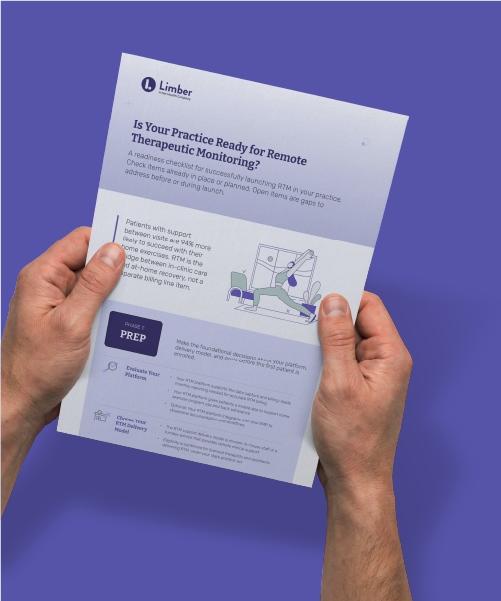
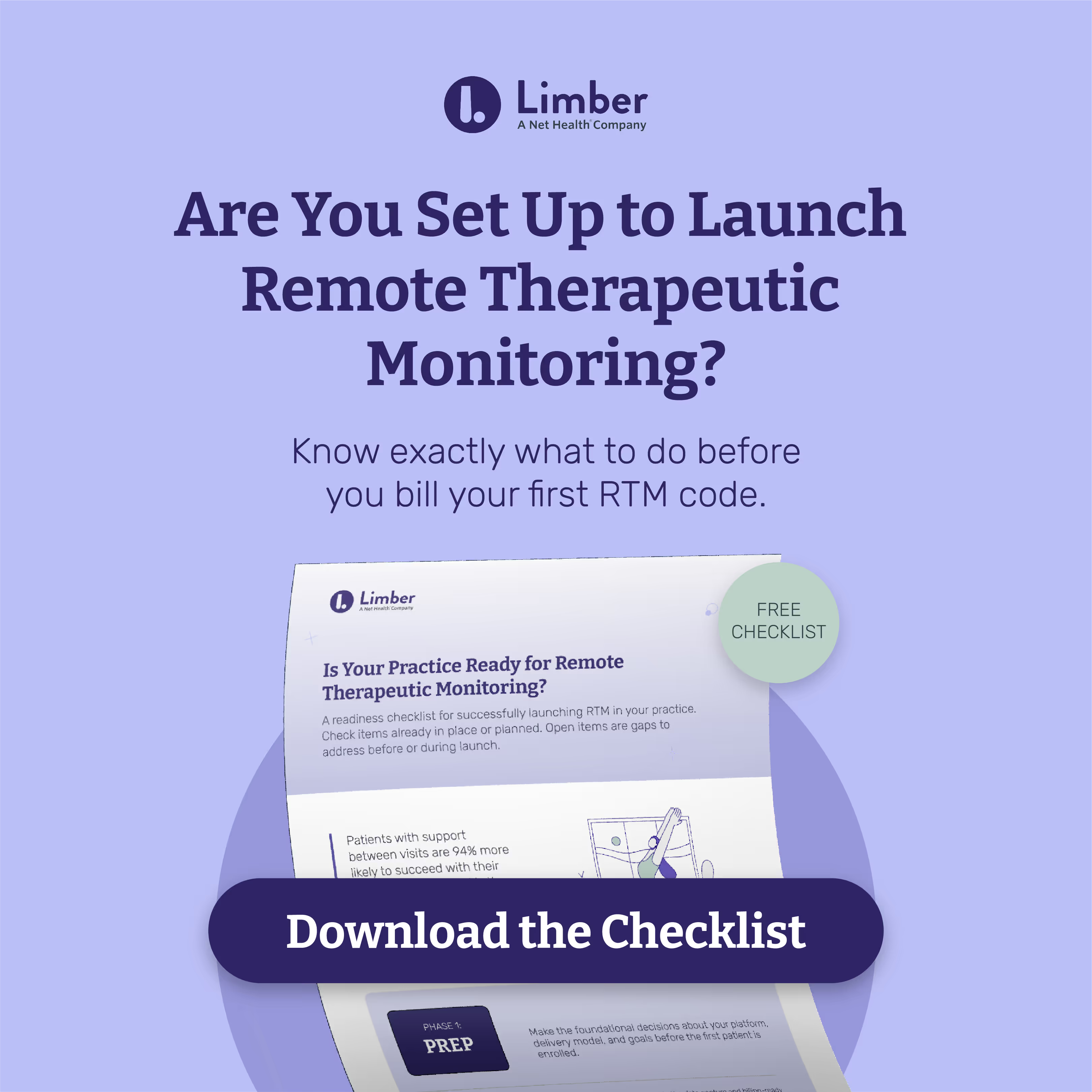
A readiness checklist for successfully launching RTM in your practice
Most patient recovery happens between visits, away from the clinic and your team's direct support. Remote therapeutic monitoring (RTM) extends your range of care into that gap, keeping patients on track with their home exercises and giving clinicians visibility into what's happening between appointments.
Properly launching RTM takes coordination across your practice. The choice of platform, the delivery model, the billing setup, and the team training all have to work together before the first patient enrolls.
This free checklist walks you through what to plan for at every phase of a successful RTM rollout.
Last updated: October 2026

What's inside the checklist?



Want the full walkthrough before you download? Read our guide to implementing RTM in a PT clinic
Work through the checklist and mark the items already in place or planned. Open items are the gaps to address before or during launch. If most items are in place, the remaining work is making sure your team understands why RTM matters for patients. If several are still open, make those your priorities before launch. Inconsistent workflows and gaps in clinician education are the most common reasons RTM underperforms on adoption and outcomes.
Start with a platform that supports data capture and billing-ready monthly reporting, with a mobile app patients use for their home exercise program. Choose a delivery model: in-house staff or a turnkey service that provides remote clinical support. Then define your goals and eligible patient populations, have your billing team review the applicable RTM CPT codes and payer coverage, and train clinicians on the RTM workflow.
RTM touches clinical, billing, and leadership teams, so leadership and clinicians should agree on what success looks like before launch. Identify at least one clinical champion to lead adoption, and hold regular project team reviews that produce action items with assigned owners.
Review performance against the goals you set during prep, with reporting configured by role for clinical, billing, and leadership teams. Review patient engagement data regularly to flag patients who need outreach, review billing monthly to confirm code thresholds are met, and track enrollment trends to find growth opportunities.
See how Limber supports RTM from prep through optimization. Request a demo and our team will be in touch.